The Dwarfs are for the Dwarfs
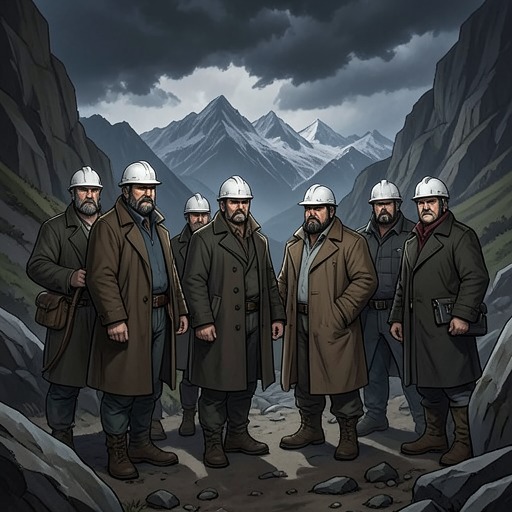
The Last Battle“The Dwarfs are for the Dwarfs” is the Dwarfs’ recurring declaration of independence from kings, Aslan, and every supposed ally. First voiced as they reject Tirian’s attempt to restore their faith, the slogan hardens into a creed of self-interest: they refuse rescue as manipulation, refuse to join the resistance, and finally insist that no one has deceived them even when Aslan’s feast is before them. Its repetitions make the phrase less a sign of genuine freedom than a measure of how completely suspicion has enclosed them.
First Refusal
The slogan emerges after the Dwarfs have been disillusioned by the false Aslan deception. When Tirian presents the real Aslan, they do not experience the moment as vindication. They exchange sneering grins, call the revelation another trick, and regard the Unicorn as merely an old horse with long ears. Griffle speaks for their mistrust: having been taken in once, they will not risk believing in stories about Aslan again. Their skepticism has a history, but it now prevents them from distinguishing the earlier fraud from the truth before them.
Tirian expected the Dwarfs to rally once they saw how they had been deceived. Instead, Griffle questions whether Tirian is really the King and says that the Dwarfs want neither kings nor Aslans. The others adopt the same position: they will look after themselves, owe allegiance to nobody, and have no use for tales about other worlds. The slogan condenses that refusal into a compact collective identity. Their next action makes the rejection concrete: they fall into marching order and head away, rather than joining Tirian’s company.
Rescue Recast as Exploitation
Eustace challenges the Dwarfs to acknowledge that they have been saved from the salt mines. Griffle answers that the rescuers intended to use them and must be pursuing a private game. The Dwarfs therefore recast an act of rescue as evidence of manipulation: help cannot be accepted as help because they assume that every offer conceals an attempt to control them. They leave to the beat of their peculiar marching song, carrying their suspicion with them rather than reconsidering it.
That withdrawal is painful to Tirian and his companions. Tirian had hoped that exposing the imposture would restore the Dwarfs’ trust in the real Aslan; their rejection shows him an unforeseen consequence of the Ape’s fraud, which has damaged belief beyond the immediate circle of its victims. The party continues in silence. Tirian and Jewel walk sadly together at the rear, while the Dwarfs’ choice leaves a political and emotional absence: a potential ally has decided that solidarity itself is another trap.
The Slogan in Battle
The words return during the fighting at Stable Hill, where the Dwarfs refuse Tirian’s appeal to take up their swords against the Calormenes. Tirian reminds them that they can fight well and calls them back to their allegiance. They answer with the same slogan, dismissing both sides as humbugs and rejecting kingship outright. Their stance is not an alliance with the Calormenes: they say they do not want Tirian’s side to win any more than the other gang. Their chosen neutrality is thus an active refusal to help either cause, even as the conflict threatens Narnia.
The cost becomes unmistakable when the Dwarfs shoot the Talking Horses with their deadly accuracy. Tirian’s party had begun to hope that they might prevail, and Poggin and the children are ready to cheer, but the arrows strike the horses before they can reach the King. The Dwarfs jeer that the others had assumed they were on their side; they want neither Talking Horses nor a victory for Tirian’s group. Their repeated phrase now accompanies an attack on the very people whose cause they refuse to join. Self-preservation has not made them harmless or detached: it has become a license to frustrate every effort at common defense.
The Prison of Their Own Certainty
Later, Aslan raises his head and shakes his mane, and a feast appears on the Dwarfs’ knees: pies, tongues, pigeons, trifles, ices, and goblets of wine. Yet the Dwarfs cannot recognize or taste the feast as such. They believe they are eating stable food and drinking dirty water from a trough. Suspicious that another Dwarf has received something better, they snatch at one another’s portions until the food is smeared or trampled and they have bruised faces and bleeding noses.
After this quarrel, they declare that at least there has been no humbug and that nobody has taken them in, then repeat, “The Dwarfs are for the Dwarfs.” The refrain reveals the irony of their certainty: although they have received a genuine gift, their suspicion makes it inaccessible, and their insistence on self-reliance turns them against one another. Aslan explains that they will not allow him to help them; they have chosen cunning over belief and become trapped in their own minds, afraid of being deceived in a way that prevents them from being brought out of their delusion. The slogan is therefore not simply a political refusal of outside authority. It names the closed circle in which distrust confirms itself, while fellowship and even visible abundance are reinterpreted as threats.